Is the Domus Aurea worth it? Yes, with three conditions attached
What you are actually buying
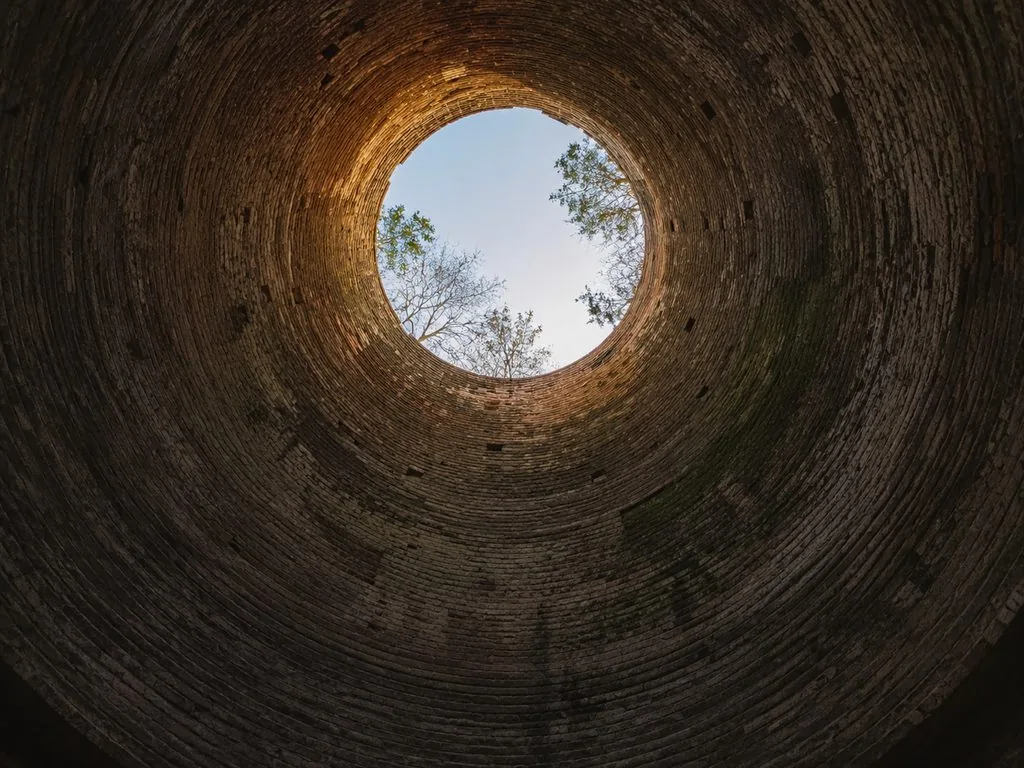
An hour and a quarter to an hour and a half underground, in a group of up to about 25, with a guide, in rooms that were the ground floor of a palace Nero began after the fire of AD 64 and never finished. You walk barrel-vaulted corridors and the cryptoporticus, you stand under the octagonal room with its domed ceiling and central oculus, and you look up at fresco fragments on the vaults. You also look at scaffolding, props and monitoring equipment, because the excavation is live and nobody hides it. The full inventory is on what you actually see.
The case for
The octagonal room is the reason I keep going back. It is an engineering ancestor of the Pantheon’s dome, and standing under the oculus with daylight coming down through it is not a thing you can get from a photograph. Then the headset goes on and the room around you fills in — walls, colour, the surfaces that were prised off centuries ago. Reviewers who have been lukewarm about everything else are consistently not lukewarm about that. Pavlo, who took one of the English-only tours, wrote: “The VR was amazing, I couldn’t sit on my seat and was watching around like crazy, huge kudos to the guys who made it.”
David, on the same product, put the other half of it plainly: “This was a terrific experience to literally step into 2000 years of preserved history. It really is a history buff’s dream.” That is the honest audience. If ruins in the abstract bore you, the headset will carry you further than you expect, but it will not carry you the whole way.
The case against, which I am not going to soften
It is cold. The park’s own figure is about 10°C inside, year-round, and it is damp with it. In August that is the best ninety minutes in Rome; in January people underdress and spend the visit thinking about their hands — what to wear. The floors are uneven. You cannot set your own pace, because the group moves as a group. And two of the four products in this catalogue explicitly exclude people with claustrophobia, which is a real signal rather than boilerplate. I once took a cousin down who turned out not to like enclosed spaces, and neither of us enjoyed the second half. The stated exclusions are set out on accessibility.
What works
- The octagonal room and its oculus, which genuinely does not photograph
- A headset that rebuilds the rooms over the brick, included in every option including the official one
- A live excavation rather than a tidied museum, with the scaffolding left in view
- Small groups and a guide, because there is no other way in
- About 10°C underground, which in a Roman August is the point
Worth knowing
- Bare structure: the marble, gold and ivory went in antiquity and are not coming back
- Uneven, damp floors and a compulsory hard hat
- Three days a week, so it has to be planned around rather than dropped in on
- Two of the four tours exclude people with claustrophobia, and all four exclude wheelchair users
- Paying two to three times the official rate is only worth it for availability, language or the right to cancel
The money condition
The archaeological park sells the guided visit with the headset for around €26 including the booking fee. The products on this site run roughly two to three times that for the same ninety minutes. If your date is inside the thirty-day release window and the official calendar has a slot in a language you can follow, book that and stop reading — the official channel, explained. If it does not, then the question changes from “is this worth it” to “is certainty worth it”, and for a lot of people crossing a continent for a site open three days a week, it is.
Decide in this order: can everyone in your party manage uneven ground and an enclosed space; is the day of the week workable; and only then, is the price in front of you the official one or a multiple of it. The first question is the one people skip and the one that ruins visits.
Frequently asked questions
Is the Domus Aurea worth visiting?
For anyone interested in Roman building rather than Roman decoration, yes — the octagonal room and the VR reconstruction carry it. It is not worth it if you need a restored interior, and it is a poor idea if enclosed spaces bother you. See the stated exclusions.
Is the Domus Aurea better than the Colosseum?
They are different in kind rather than in rank: one is a booked, guided, ninety-minute walk through a live excavation, the other is the monument built on the drained lake in its grounds. The comparison is on Domus Aurea versus Colosseum.
Is the VR experience worth it on its own?
It is the part visitors single out, and it is included in every product here and in the official guided rate, so nobody should be charging you extra for it. Whether it earns the reputation is argued out on the VR page.
Should I book the official ticket or a tour?
Official, if your date is inside the thirty-day window, the calendar has a slot and the language works. A booked tour otherwise, for availability, language and free cancellation — not for value. The official ticket explained.