Key takeaways
- You cannot buy a ticket and wander in. Every visit is guided, in groups capped at about 25 people, and the stated reason is that this is an active excavation rather than a museum — why there is no self-guided entry.
- It opens on three days a week. Friday, Saturday and Sunday, closed Monday to Thursday, and closed again on the first Sunday of each month. Entry slots run roughly every 15 minutes from around 9am, with the last entries in the late afternoon — the opening days and slots.
- The official guided visit with the VR headset is around €26, including the €1 booking fee, on the park’s own listing. The four tours here run $65 to $86, which is roughly two to three times that. They buy availability, language and cancellation rights — never a cheaper ticket — what a visit really costs and booking direct instead.
- Official tickets are released about 30 days ahead, and the good slots go. If you are planning further out than that, the official calendar has nothing to sell you yet, while the operators hold their own allocations — how far ahead to book.
- It is about 10°C down there, all year, on the park’s own figure, and damp with it. In August that is the best thing about the visit. In January people underdress for it badly — what to wear underground.
What the official ticket buys, and what a tour adds on top
The two lists are shorter than you would expect, and the second one is the reason this page exists. Read them side by side before you spend anything.
What the park sells you directly
- Admission on a guided visit, in a group of up to about 25. There is no other kind of entry — the reason why
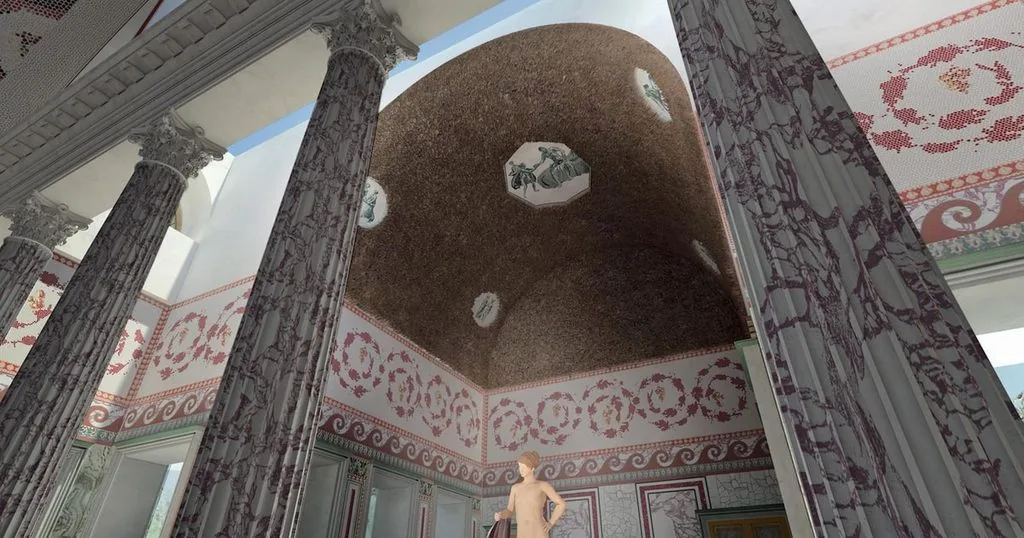
- The VR headset, which reconstructs the rooms as they were over the bare brick you are standing in, plus the video projections on the walls — what the headset actually does
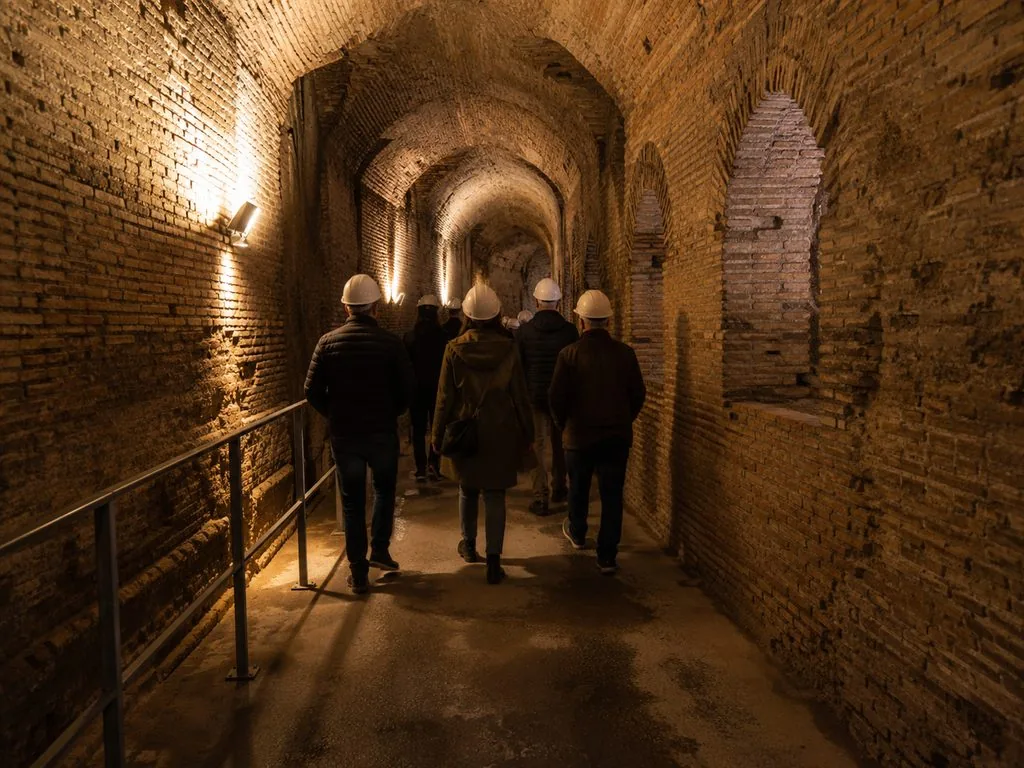
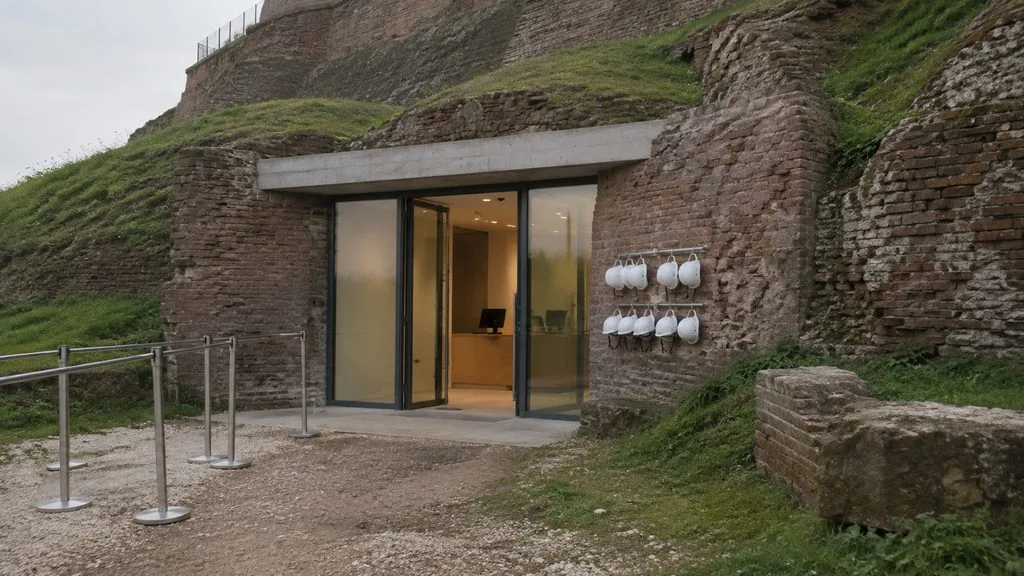
- A hard hat, issued at the entrance and worn for the whole visit, because the excavation is a working site
- An entry-only rate of around €18, without the tour and without the headset. Slots for it exist at limited times, but travellers report the official system often will not sell one online, so do not build a day around it — the official channel, in detail
- A reservation that is not refundable, released about 30 days out, in whatever language the rota gives you that morning
What booking a tour adds
- Availability beyond the thirty-day release, and on dates where the official calendar has already emptied — when the calendar is bare
- A language you can choose. The flagship tour runs in English, French, Italian and Spanish with an audioguide in all four; the other two Domus Aurea tours are English only, and none of the four is offered in German — the four compared
- Free cancellation up to 24 hours before, which on a three-day-a-week site is worth something real
- On the Colosseum combination only: the Colosseum guided tour, Roman Forum and Palatine entry, and hotel pickup and drop-off — rated 3.9 from five reviews, so weigh it carefully (the combination, honestly)
- Nothing else. Same excavation, same guided visit, same headset, same group cap — is that worth two to three times the money?
What actually happens, in order
From the moment you book a slot to the moment you come back up into the park. Every visit follows this sequence, whichever ticket got you in.
The visit itself lasts an hour and a quarter to an hour and a half, and almost all of it is spent below ground level in rooms that were buried on purpose. Nothing here is self-guided: a guide walks the group through in one direction and you leave together.
- Booking a slot — Tickets are released roughly 30 days ahead and entry runs on 15-minute slots from around 9am. There is no walk-up option — how far ahead to book.
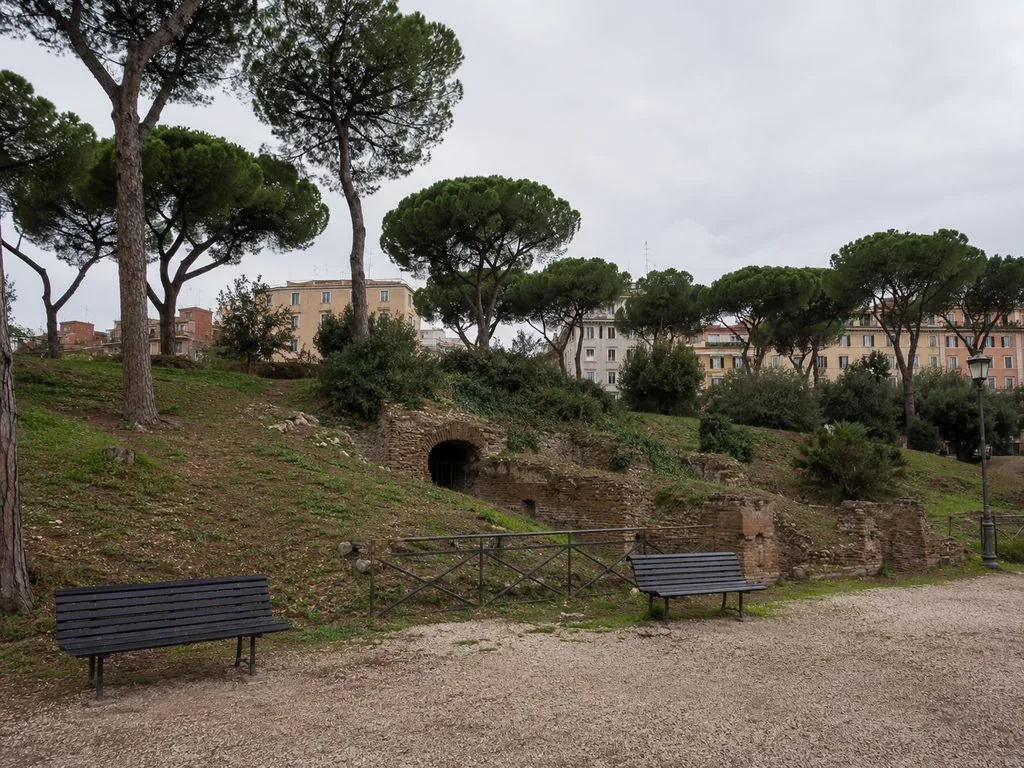
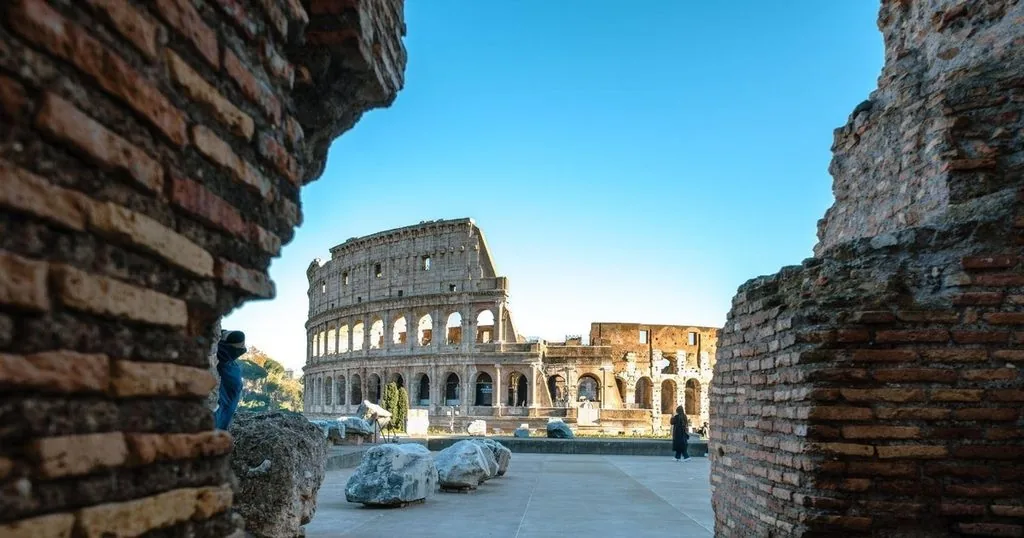
- Finding the entrance in Colle Oppio — The entrance is on Via della Domus Aurea, inside the Parco del Colle Oppio, on the hill directly across from the Colosseum; metro line B or C to Colosseo, then a short uphill walk. Tours meet in two different places, which is where people go wrong — both meeting points.
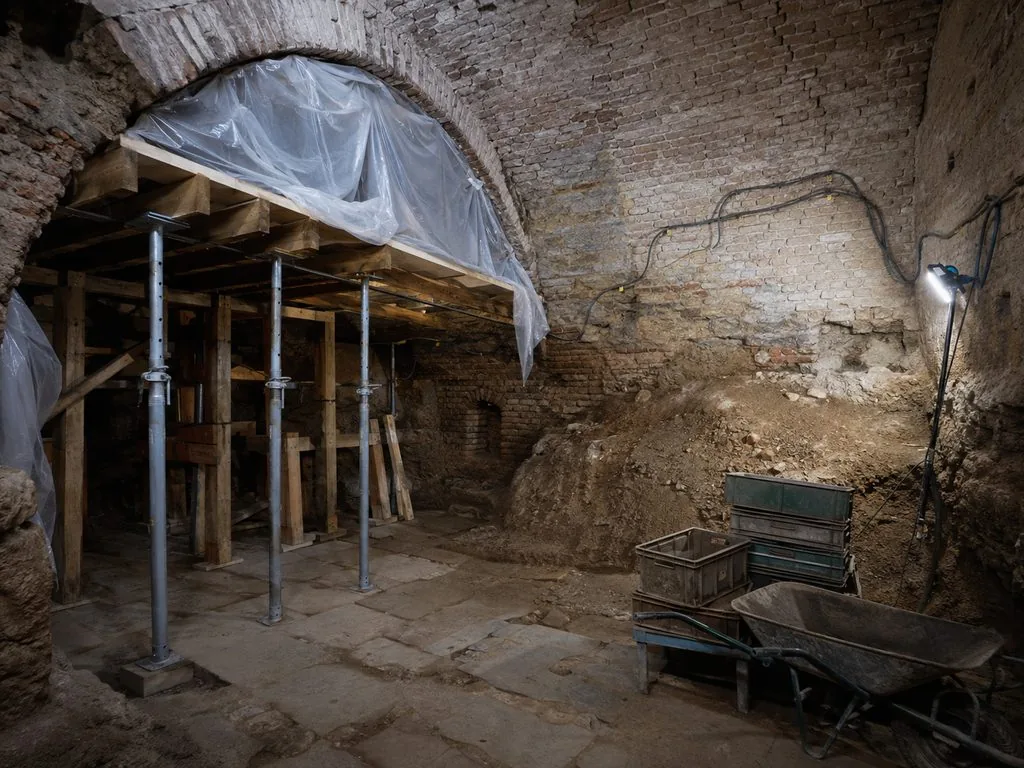
- The hard hat — Hats are issued at the entrance and must be worn throughout. It is an active archaeological site, and the scaffolding and monitoring equipment around you are the reason.
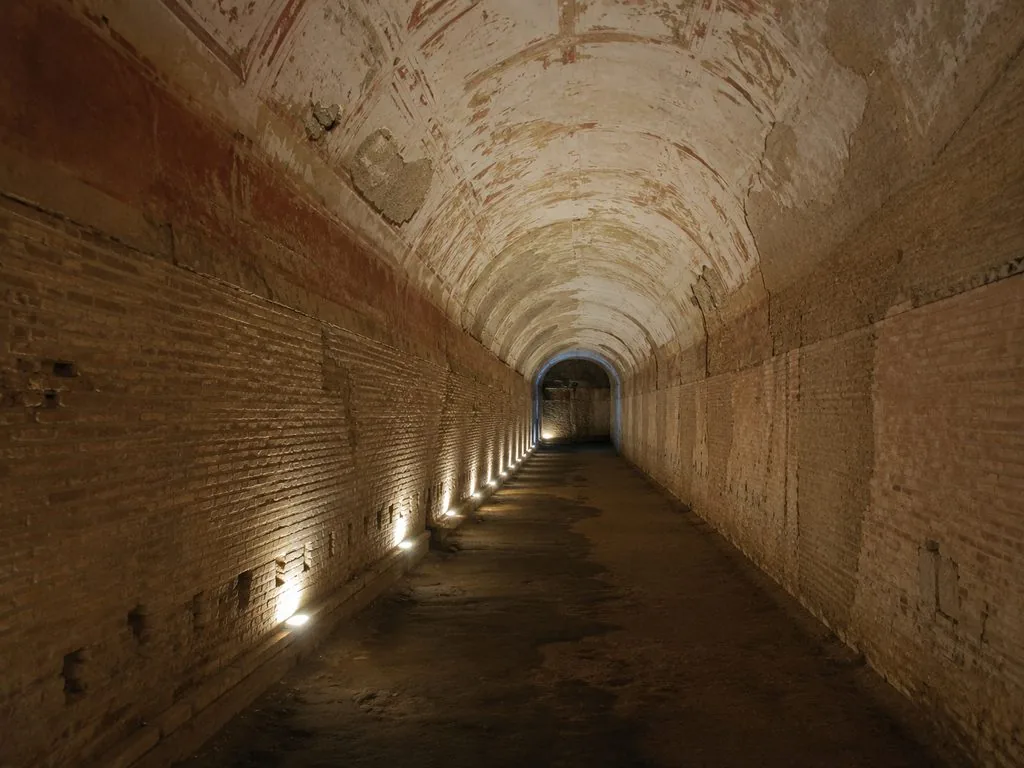
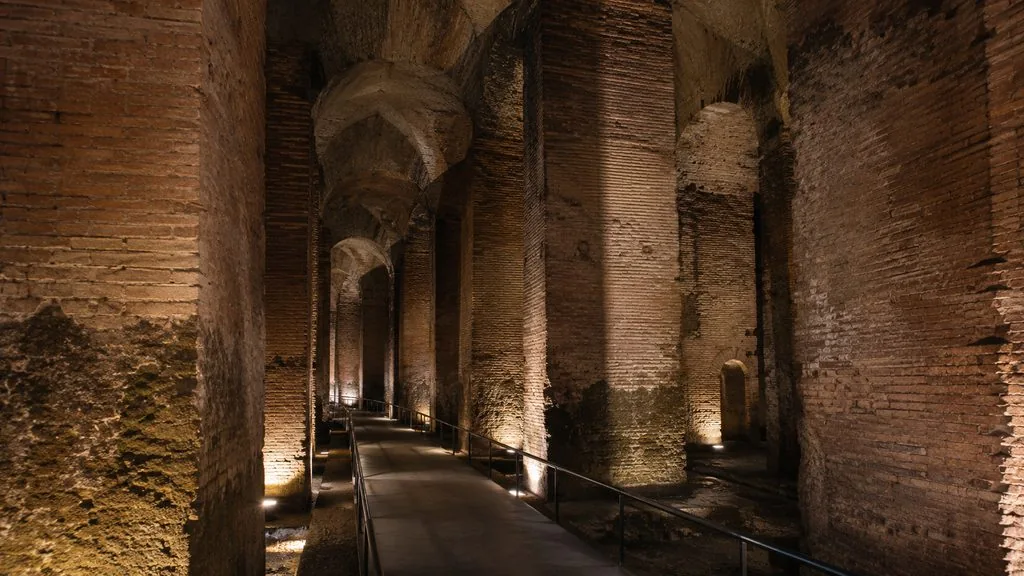
- The corridors and the cryptoporticus — Long barrel-vaulted corridors in bare brick and concrete, cool and damp, with uneven floors. The marble, gold and ivory that gave the palace its name were stripped in antiquity — what survives.
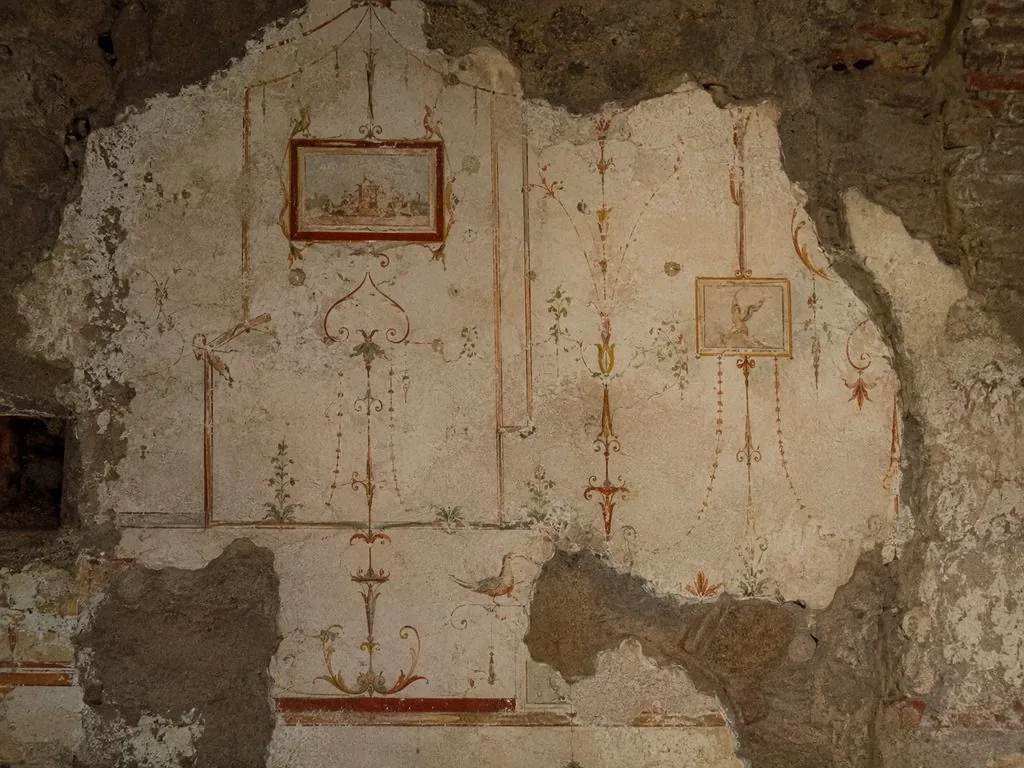
- The fresco vaults — Fragments of fine white-ground painting on the vaults: slender candelabra, floral motifs and figures. Renaissance visitors dropped in through holes in the hillside and scratched their names into the plaster — where the word grotesque comes from.
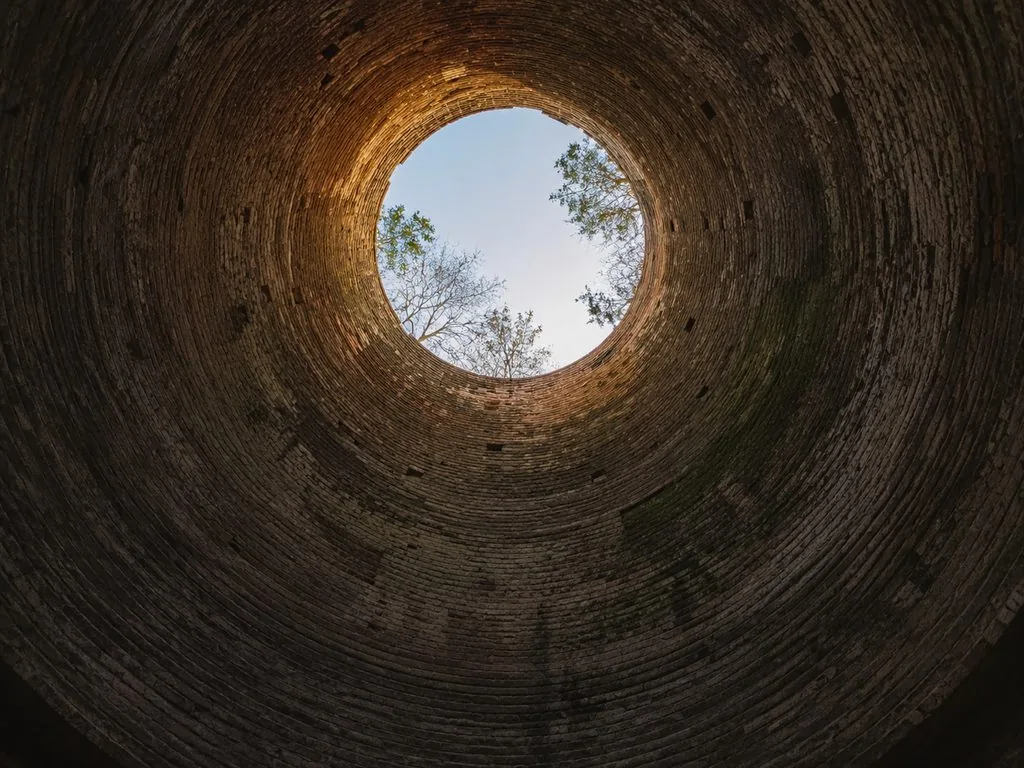
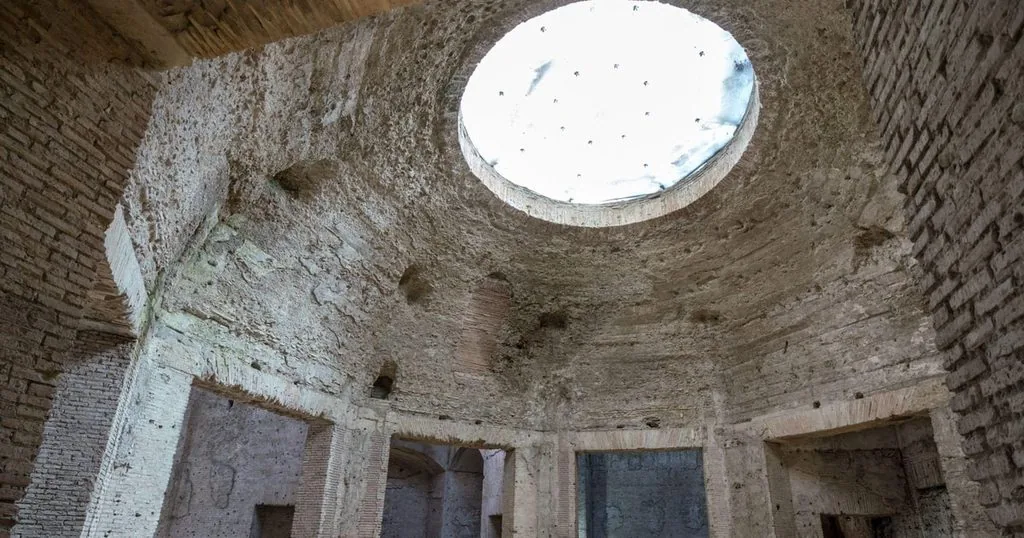
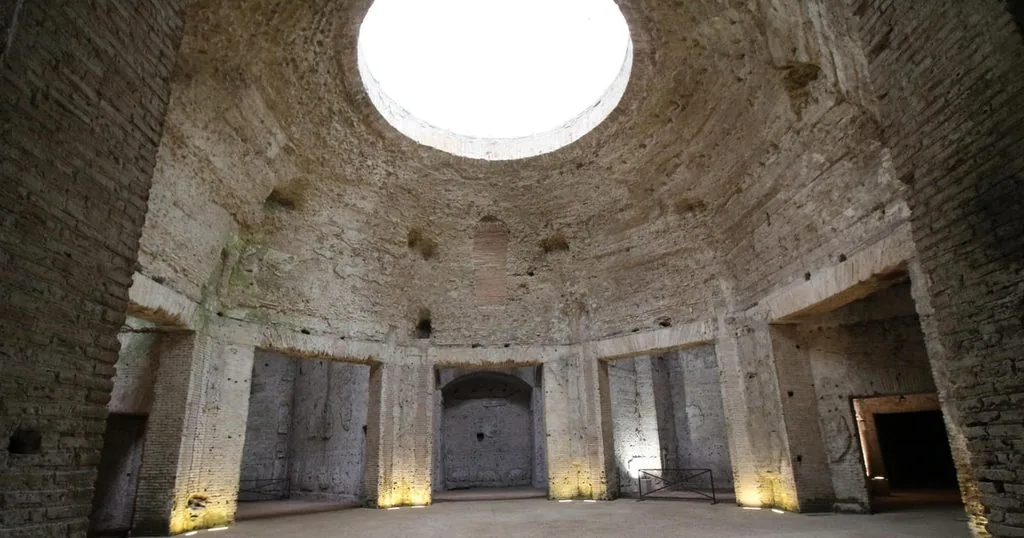
- The octagonal room — The famous one: a domed octagonal space with a central oculus, an engineering ancestor of the Pantheon’s dome. If you photograph one thing down there, it is this.
- The VR sequence — Headsets are handed out and the rooms are rebuilt around you, over the brick you are standing in. It is the part reviewers name unprompted, and it is included in every product here and in the official rate — whether it earns its reputation.
- Back out into the park — You come up into Colle Oppio, roughly 75 to 90 minutes after going down, into daylight and about twenty degrees more warmth in summer. The Colosseum is a five-minute walk downhill — how the two compare.
If you are weighing this against the queue at the Colosseum, the honest summary is that the Domus Aurea is smaller, quieter, colder and considerably stranger, and the headset is why people remember it — whether it is worth your morning.
How to decide, in four steps
Check the day first
Friday, Saturday or Sunday, and not the first Sunday of the month. This kills more plans than price does, and it is the one thing to settle before you look at anything else.
Try the official calendar
If your date is inside the thirty-day release window and a slot exists in a language you can follow, book it direct. I would rather tell you that than sell you something.
If it is empty, or the language is wrong, come back here
Those are the two situations where a booked tour is the sensible purchase rather than an expensive one. Availability and language are what you are paying for.
Check the live price against the widget, not against this page
Every figure printed here is a from price that moves with the date and the party size. The widget below is the number that will actually be charged.
Check dates for the multilingual tour
The flagship product, and the default recommendation on this site: 1.5 hours, admission, guided tour, the VR experience and all taxes, running in English, French, Italian and Spanish with an audioguide in all four. It is both the cheapest and the best rated of the four. It meets at Metro Colosseo, at ground level near the green kiosk, where the guide holds a C.I.S. Tours sign — not at the park entrance, which is a different place and a common mistake.
Which of the three is the right booking?
The two near-identical English-only tours are separated in the table below by one of them; the choice between those two is availability on your date, not merit. Prices, ratings and review counts are the live GetYourGuide figures, and every price is a from price that moves with the date.
| Start hereDomus Aurea Guided Tour and Virtual Reality Experience | Domus Aurea: Nero’s Golden House Guided Tour | Colosseum Guided Tour & Domus Aurea & VR Experience | |
|---|---|---|---|
| Price | $65 / person | $86 / person | $190 / person |
| Languages | English, French, Italian and Spanish, with an audioguide in all four. The only multilingual option in the catalogue | English only | Spanish, French, English and Italian — though one of the five reviewers booked in English and reported that the Domus Aurea section ran in Italian |
| VR headset included | Yes | Yes | Yes |
| What else is included | Admission, the guided tour and all taxes. Nothing beyond the site itself | Entrance ticket, a professional guide, VR devices and all fees | Colosseum guided tour, Roman Forum and Palatine entry, plus hotel pickup and drop-off. Food and drink are excluded |
| Duration | 1.5 hours | 1.5 hours | 2.5 hours |
| Who it suits | Almost everyone, and anyone who needs a language other than English. Rated 4.7 from 251 reviews — reviewed in full | English speakers who want the biggest evidence base in the catalogue: 4.5 from 559 reviews, more than the other three put together — reviewed in full | People who want the Colosseum, the Forum and hotel pickup in one booking, and who have read that this is 3.9 from only five reviews — reviewed in full |
| Book this → | View → | View → |
Photo Gallery
Bare brick, painted vaults and a hard hat
What is actually down there, which is not what the name suggests. The marble and the gold went in antiquity; the structure is what survived, and it survived because somebody buried it.
All four Domus Aurea tours
There are four, and that is the entire GetYourGuide catalogue for this site — most Rome tours listed nearby merely walk past the park. Each card opens live availability, and each has an honest review on this site.
 Best rated
Domus Aurea Guided Tour and Virtual Reality Experience
 Most reviewed
Domus Aurea: Nero’s Golden House Guided Tour
 VR included
Domus Aurea Guided Tour with VR Experience
 With Colosseum
Colosseum Guided Tour & Domus Aurea & VR Experience
What people who actually went down there said
Taken verbatim from the GetYourGuide reviews of the four tours compared here, trimmed only at sentence boundaries. Two things come up again and again: the headset, and the cold.
The tour is great, the information is great and you get to imagine how grandiose the palace was. The VR experience is extremely good.
Wonderful tour. The temperature inside was a great reprieve from the heat of June. The tour guide was thorough and educated us so well.
Great tour. The virtual reality was a nice touch. Bring a sweater because it was quite chilly underground.
I liked the palace itself, the greatness of it. The VR was amazing, I couldn’t sit on my seat and was watching around like crazy.
We absolutely loved this tour. Having been to Rome before, this was something we’d missed out on.
Fantastic. We saw an amazing number of rooms and the 3D show was great. Our guide was very knowledgeable and passed on a lot of information.
Excellent. I highly recommend this tour. Especially the VR viewing at the end. Really brings everything to life.
Domus Aurea was spectacular. Our guide was very knowledgeable and willingly answered any questions.
The tour was great, loved the virtual reality and seeing the ruins of Nero’s palace. Well worth the money.
Ratings and reviews are the operators’ live GetYourGuide figures. Read our full tour reviews ›
Four things I get asked on the way up the hill
I have taken visiting friends and one reluctant cousin down there over the years, and these are the questions that come up somewhere between the metro and the park gate.
Why is a Roman palace under a park?
Because his successors wanted it gone. Nero began building after the fire of July AD 64 and died in AD 68 with the palace unfinished; the lake in its grounds was drained and the Colosseum built on the spot, and Trajan’s baths were put up directly over the palace itself. That burial is the only reason these rooms and their painted vaults are still here — how it ended up buried and the history, kept short.
Can I take a child, and what does a child pay?
Under-18s go free, though they still need a booked place, and EU citizens aged 18 to 25 pay a token reduced rate of about €2. Whether a child enjoys it is a different question: it is dark, cold and made of brick, and the headset is what carries it — one reviewer’s six-year-old loved the VR and said so — taking children down.
Is it hard going, physically?
The floors are uneven and damp and it is about 10°C throughout. The operators state that these tours are not suitable for wheelchair users or people with significant mobility restrictions, and two of the four also exclude people with claustrophobia. I would confirm anything that matters with the park before you book — the stated exclusions and the official Domus Aurea page ↗.
Which of the two English-only tours should I book?
Whichever one has your date. They are 4.5 apiece, they cost the same, they run the same 1.5 hours, they include the same things and they meet at the same street corner. The only real separator is the review count, where one has 559 against the other’s 233 — all four ranked and the newer one reviewed.
Can’t make these dates?
Browse more available Domus Aurea tickets and find one that fits your schedule — all with instant confirmation and free cancellation.
The Domus Aurea, explained
The Domus Aurea is the buried ground floor of the palace Nero began building in Rome after the fire of AD 64, preserved under the Parco del Colle Oppio because the emperors who followed him put Trajan’s baths directly on top of it, and it can be visited today only on a booked guided tour, on three days of the week, wearing a hard hat and carrying a VR headset that rebuilds the rooms over the bare brick you are standing in.
I am Elena Brandi. I grew up in Monti, two streets from the Colle Oppio, and I have been down there half a dozen times over fifteen years, because the excavation keeps changing and the open rooms are not always the same rooms. I have turned up on a Tuesday when it was shut, booked the wrong language, and taken a cousin who turned out not to like enclosed spaces.
Why a Roman palace is under a public park
Nero was emperor from AD 54 and died in AD 68; the great fire of Rome was in July AD 64. He started the palace after the fire and never finished it, and his successors then set about erasing it. The lake in its grounds was drained and the Colosseum built on that spot, and Trajan’s baths went up directly over the palace. Burying a building is a strange way to destroy one, because burial is also how you preserve it, and that is why these rooms are still here — the short version.
They were found again around the end of the fifteenth century, when people dropped through holes in the hillside into what they took to be caves — grotte. Renaissance artists climbed down to copy the decoration on the vaults, Raphael among them, and the style took its name from the caves: grottesche, which is where the English word grotesque comes from — the frescoes and the graffiti.
Guided only, and three days a week
You cannot buy a ticket and wander. Every entry is on a guided visit in a group of up to about 25, and the stated reason is that this is an active excavation — not a formality. The site opens Friday, Saturday and Sunday, and closes again on the first Sunday of each month. Slots run roughly every fifteen minutes from around nine in the morning until the late afternoon, and the visit takes an hour and a quarter to an hour and a half. Settle the day of the week before anything else — the opening pattern.
The official ticket, and what booking a tour changes
Here is the uncomfortable bit, and I would rather you had it from me than found it afterwards. The park sells the same admission, the same guided visit and the same headset that the tours on this page sell, and it sells them for a fraction of the price: booked tours run around two to three times the official rate. There is a cheaper official option with no tour and no headset, though travellers report the system often will not sell one online. Under-18s go free but still need a booked place, and EU citizens aged 18 to 25 pay a token reduced rate — the official channel.
So what does the extra money buy? Three things, and I will not pretend it buys a fourth. Availability: official tickets are released about thirty days ahead, and in a busy month the calendar is frequently empty by the time you look. Language: the official rota does not promise you your language on your date, and of the four products here only the flagship runs in more than one, with none of them offered in German. Free cancellation: the park’s reservation is not refundable — the comparison in full and what to do when the calendar is bare.
What the headset actually adds
The VR sequence is the part visitors single out, and it is included in every product here and in the official rate too, so nobody is selling it to you as an extra. It reconstructs the rooms as they were, over the brick in front of you, alongside video projections onto the walls. That matters, because what survives down there is structure: barrel-vaulted corridors, the cryptoporticus, painted fragments on the vaults, and the octagonal room with its domed ceiling and central oculus, an engineering ancestor of the Pantheon’s dome — whether it earns its reputation.
It is cold down there, and you will wear a hat
The park’s own figure for the temperature inside is about ten degrees, year-round, and damp with it. In August that is the most pleasant hour and a half in Rome; in January people underdress badly, so bring a layer — what to wear underground. The floors are uneven and the scaffolding is part of what you are looking at. The operators state that these tours are not suitable for wheelchair users or people with significant mobility restrictions, and two of the four also exclude people with claustrophobia. Confirm anything that matters with the park — the stated exclusions.
What I tell friends
Check the day first, then open the official calendar. If your date is inside the thirty-day window and there is a slot on it in a language you can follow, book that one and spend the difference on lunch in Monti. If it is empty, or the language is wrong, or your trip is months away, book a tour here and do not feel robbed: you are buying certainty and the right to change your mind, not a better visit. There is only one visit — whether to go at all and the four compared.
Frequently asked questions
Can you visit the Domus Aurea without a tour?
No. Entry is on a guided visit only, in groups of up to about 25, and the stated reason is that the site is an active excavation rather than a museum — hard hats are issued at the entrance and worn throughout. There is no ticket that lets you walk in and wander, and no walk-up option on the day — the full answer and what the guided route covers.
What days is the Domus Aurea open?
Friday, Saturday and Sunday, and it is closed from Monday to Thursday. It also closes on the first Sunday of each month, which is the detail that catches people who have already booked flights. Entry slots run roughly every 15 minutes from around 9am, with the last entries in the late afternoon — opening days and entry slots.
How much are Domus Aurea tickets?
There are two answers and they are far apart. The park sells the guided visit with the VR headset directly, and that official rate is the cheapest way in by a wide margin. The four tours on this page run $65 to $86 for the same admission, the same guided visit and the same headset, which is roughly two to three times the official figure — the arithmetic, worked through and how to book direct.
How far in advance do Domus Aurea tickets go on sale?
About 30 days, and the better slots go quickly. That window is the practical reason people end up booking a tour: if your trip is further out than a month the official calendar has nothing to sell you, and if you are arriving in a busy month it is frequently empty by the time you look, while the operators hold their own allocations — how far ahead to book and what is available.
What does the VR headset actually do?
It reconstructs the rooms as they were, over the bare brick and concrete you are standing in, and it is paired with video projections onto the walls. It is included in all four products and in the official rate, so it is not something a tour adds. Reviewers name it unprompted more than anything else about the visit — whether it earns that and the tours that include it.
How long does the visit take?
An hour and a quarter to an hour and a half underground. All four products are listed at 1.5 hours except the Colosseum combination, which runs 2.5 hours because it adds the Colosseum and the Forum. Allow extra for finding the meeting point and for the walk up from the metro — how long to allow.
Where do the tours meet?
In two different places, and this is worth checking twice. The flagship multilingual tour meets at Metro Colosseo, at ground level near the green kiosk, with the guide holding a C.I.S. Tours sign. Both English-only tours meet at the corner of Via delle Terme di Tito and Via Nicola Salvi, on the park side. The site entrance itself is on Via della Domus Aurea, inside the Parco del Colle Oppio — getting there, and both meeting points.
Is it suitable for wheelchair users, or if I am claustrophobic?
The operators state that these tours are not suitable for wheelchair users or people with significant mobility restrictions, and two of the four also exclude people with claustrophobia. The floors are uneven and damp and it is about 10°C year-round. Confirm anything that matters directly with the park before you book — the stated exclusions, what to wear, and the official Domus Aurea page ↗.
Still have questions? Email us [email protected]