The grotesque frescoes: where the English word comes from
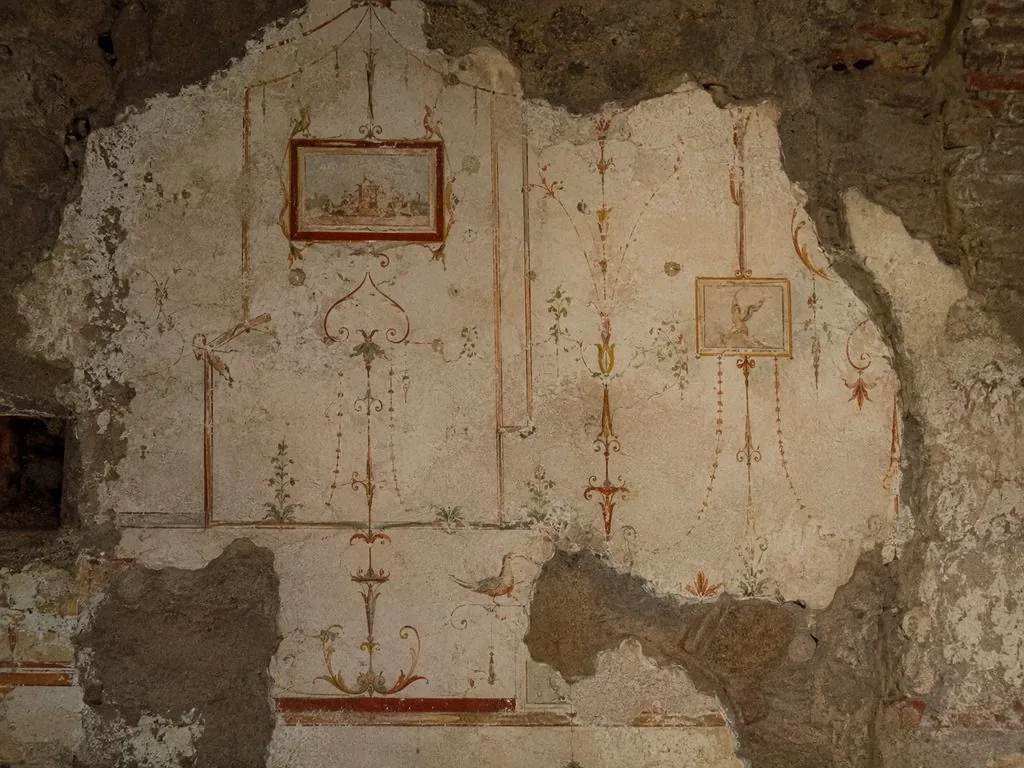
What survives, honestly
Fragments. Fine white-ground painting on the vaults rather than complete decorative schemes, because the rooms were stripped in antiquity and buried afterwards. Expect passages of painting above your head rather than painted rooms around you, and you will be pleased rather than let down — everything else you see. This is also why the VR headset matters here more than it would elsewhere: it puts the surfaces back onto the shapes.
The graffiti
The artists who came down with ropes and candles left their names in the plaster, and some of it survives. There is something worth standing still for in a five-hundred-year-old signature scratched next to a two-thousand-year-old candelabrum. Ask your guide where it is, since the accessible rooms shift as the excavation moves and nobody goes down there unguided.
Frequently asked questions
Does the word grotesque come from the Domus Aurea?
Yes. The rooms were taken for caves — grotte — when they were found again around the end of the fifteenth century, and the painted style copied from them was called grottesche, which English borrowed as grotesque.
Did Raphael visit the Domus Aurea?
Raphael was among the Renaissance artists who went down to copy the painted decoration on the vaults. Some of the graffiti those visitors left in the plaster survives — see the history page.
Can you still see the frescoes?
Fragments of them, on the vaults, in the rooms open on the day you visit. Which rooms those are changes as the excavation moves — see what you actually see.